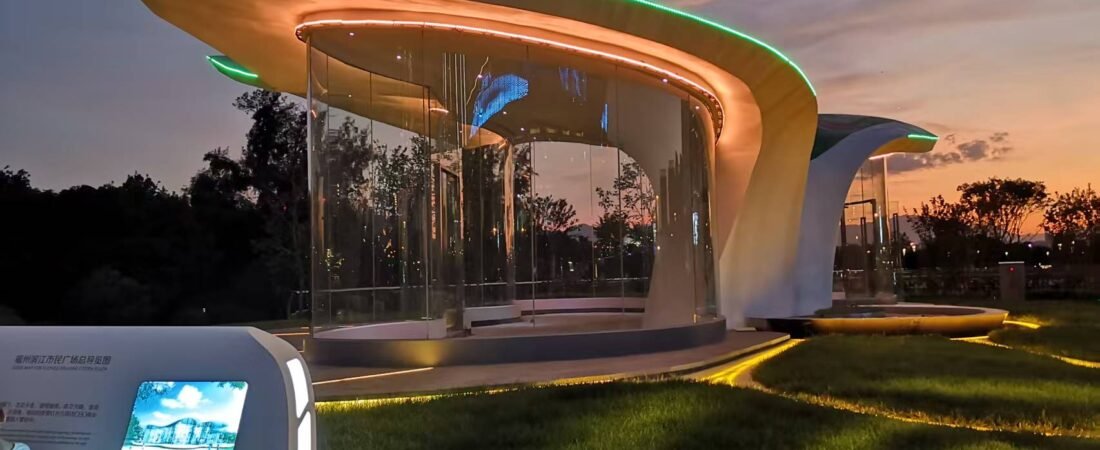
People often imagine that a public sculpture begins with an artist’s idea and ends when the work is installed. The reality is both more practical and, in many ways, more fascinating. A successful public artwork is shaped by countless decisions along the way. Drawings become models. Models become engineering studies. Materials are tested. Surfaces are refined. Large components are fabricated, transported, assembled, and adjusted on site. By the time a sculpture reaches its destination, it has already been through a remarkable journey.
Every Project Starts with a Conversation
The first stage of a public sculpture is often not a sketch but a question. What should this artwork bring to the space? Should it become a landmark, create a quiet place for reflection, or offer visitors a memorable first impression? Understanding the purpose of a project helps guide every decision that follows, from scale and material to location and construction. Good public art begins by listening.
Small Models Solve Big Problems
Before large sculptures are built, ideas are often explored through drawings and scale models. These studies allow artists and project teams to understand proportion, movement, and the relationship between the artwork and its surroundings. A model can reveal opportunities and challenges that are difficult to see on paper alone. Many important decisions are made while the sculpture is still small enough to fit on a table.
Materials Have Their Own Character
Every material behaves differently. Stainless steel reflects changing light and surrounding landscapes. Bronze develops a natural patina over time. Stone carries its own geological history and texture. Choosing a material is not simply a technical decision. It influences how people experience the artwork and how the sculpture will age within its environment. The material becomes part of the story.
Engineering Protects the Artistic Vision
Large public sculptures must withstand weather, gravity, and the passage of time. Structural systems are carefully developed to support the artwork without overwhelming its visual qualities. Foundations, connections, and internal frameworks work quietly behind the scenes, allowing the sculpture to appear effortless while remaining safe and durable. The best engineering is often invisible.
Craftsmanship Brings Ideas into Reality
Fabrication is where design meets making. Metal is cut and welded. Stone is carved. Surfaces are polished or textured. Individual components are assembled and refined through careful handwork. Even with advanced technology, many stages of public sculpture still rely on skilled craftsmanship and patient attention to detail. Every finished surface carries the evidence of human hands.
Installation Is the Final Creation
The arrival of a sculpture on site is not simply a delivery. Large components are carefully positioned, aligned, and secured. Small adjustments are often made to respond to the conditions of the location. Light, landscape, and architecture finally meet the artwork as they were intended. Only then does the sculpture become part of its new home.
A Sculpture Continues to Evolve
Installation is not the end of a public artwork’s story. Sunlight changes reflective surfaces. Weather adds character. Communities discover new ways to interact with the sculpture. Years later, visitors may experience the work differently from those who first encountered it. Public art remains alive because the world around it never stands still.
Beyond Making Objects
At Axis Heritage, we see public sculpture as a journey that combines artistic vision with craftsmanship, engineering, and collaboration. Every stage of the process contributes to the final experience, from the first conversation to the moment a community begins to make the artwork its own.