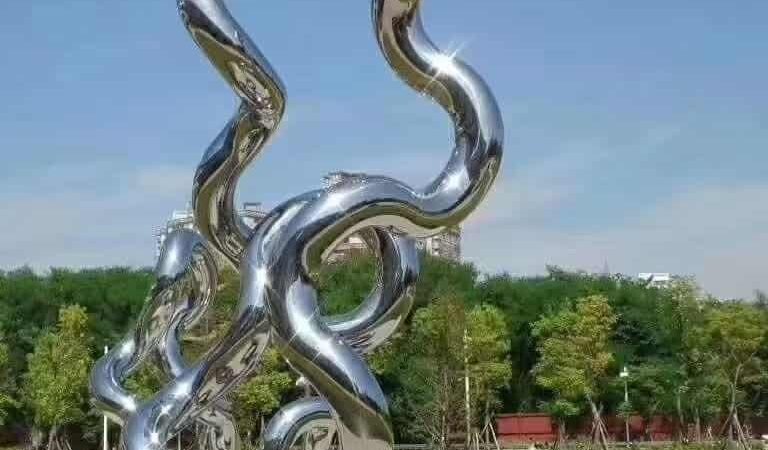
In the realm of modern landscape architecture, materials are more than mere structural components; they are mediumistic expressions of time, light, and environment. Among the metal alloys available to designers, weathering steel (commonly known as Corten) and stainless steel stand out as the two defining, yet diametrically opposed, mediums of contemporary sculpture and spatial design.
While one embraces the slow, organic decay of its surface to protect its inner core, the other completely resists the elements, reflecting the world around it with pristine permanence. For designers, choosing between Corten and stainless steel is not merely a technical decision—it is a fundamental choice of artistic narrative.
Corten Steel: The Living Patina
Corten steel belongs to the family of weathering steels, engineered specifically to eliminate the need for painting or artificial coating. Its alchemy lies in its unique chemical composition, which typically includes precise additions of copper, chromium, nickel, and phosphorus.
When exposed to the atmospheric elements, instead of corroding destructively like mild steel, Corten undergoes a controlled oxidation process:
- The Patina Timeline: Over a period of 1 to 3 years depending on local climate conditions, the alloy develops a dense, protective rust-like patina.
- Corrosion Stagnation: Once this outer oxide layer fully matures, the rate of further corrosion drops to less than 0.01 mm per year.
- Structural Longevity: This self-healing shield seals the underlying steel from moisture and oxygen, granting architectural sculptures an outdoor lifespan that easily exceeds 100 years without structural degradation.
Aesthetically, Corten roots a landscape design in the natural world. Its deep hues transition from an early bright orange to a mature, velvety amber-brown. This rich texture harmonizes effortlessly with green foliage, stone pavements, and raw earth, making it the premier choice for projects requiring an organic, rustic, or historical “sense of place.”
Stainless Steel: The Luminescent Monument
Where Corten absorbs light and yields to the environment, stainless steel commands its surroundings through reflection and absolute resilience. The defining element of stainless steel is chromium, which must make up at least 10.5% of its composition.
In high-end public art and architectural installations exposed to harsh conditions, studios utilize premium grades to ensure flawless structural integrity:
- Alloy Engineering (Grade 304 vs. 316): While Grade 304 is suitable for inland urban areas, marine-grade 316 stainless steel is mandatory for coastal environments or saline splash zones. Grade 316 introduces 2% to 3% molybdenum, which dramatically increases resistance to pitting and chloride-induced stress corrosion.
- Passive Chromium Layer: The chromium in the alloy reacts instantly with oxygen to form an invisible, microscopically thin, self-repairing layer of chromium oxide. This layer renders the steel completely passive to water, pollution, and chemical degradation.
- Sustainability Metrics: Stainless steel is an exceptionally sustainable choice; it possesses an estimated end-of-life recycling recovery rate of 85%, allowing it to be repurposed indefinitely without loss of material quality.
Visually, stainless steel brings a sense of high-precision futurism and lightness to public spaces. It can be finished to a brushed satin texture that softly diffuses sunlight, or mirror-polished to actively reflect the shifting colors of the sky, passing clouds, and nearby water features.
Comparative Material Matrix
To guide the selection process for municipal, landscape, and commercial projects, the primary physical and performance metrics of these two alloys are contrasted below:
| Property | Weathering Steel (Corten) | Stainless Steel (Grade 316) |
| Primary Alloys | Copper, Chromium, Nickel, Phosphorus | Chromium (16–18%), Nickel (10–14%), Molybdenum (2–3%) |
| Surface Finish | Evolving matte oxide patina (Orange to dark brown) | Polished mirror, brushed satin, or textured |
| Maintenance Profile | Zero maintenance; surface self-heals if scratched | Low maintenance; occasional washing to prevent dirt build-up |
| Run-off Risk | Rust bleeding/staining occurs during initial 1–2 years | Zero runoff; entirely non-staining and inert |
| Primary Design Intent | Earthy integration, rustic warmth, historic context | Modern luxury, high-contrast focal points, coastal resilience |
A Crucial Structural Note on Corten: During its initial weathering phase, Corten steel sheds trace amounts of oxidized iron. This runoff can cause permanent rust-staining on porous surfaces beneath the sculpture, such as concrete, light-colored limestone, or marble. Designers must plan for this by incorporating gravel beds, hidden drainage channels, or specialized runoff trays during the installation phase.
Sculpting the Perfect Integration
The decision between Corten and stainless steel ultimately dictates how a sculpture communicates with the viewer. Corten acts as a monument to time, reflecting the rhythm of the seasons and the harsh reality of nature. It excels in large retainers, public parks, open courtyards, and expansive garden settings where the artwork is meant to grow with the landscape.
Stainless steel, conversely, acts as a pristine disruption to nature. It is ideal for high-traffic urban plazas, corporate entryways, luxury resort pools, and marine environments where permanent brilliance and stark contrast are required.
At Axis Sculpture Art, we possess over twenty years of experience balancing the distinct structural engineering and artistic nuances of both materials. By blending old-world artisan craftsmanship with advanced modern fabrication technology, we help design-build teams, architects, and developers select, shape, and deliver monumental steel installations that endure for generations.
To bring custom, high-durability steel artistry to your next development project, discover our full capabilities and recent commissions at axisculpture.art.