Public sculpture is often our most accessible encounter with art. Long before we know the artist’s name or the story behind a work, we respond to its presence—how it shapes a space, reflects its surroundings, and invites curiosity. The most memorable public artworks do more than occupy a location. They create lasting connections between people, place, and purpose.
At Axis Heritage, we believe that successful public art is a collaborative process. Artistic vision remains at its heart, but a sculpture achieves its greatest potential when it responds to the needs of its client, the experiences of the public, the culture of its setting, the character of its environment, and the realities of long-term stewardship. These five dimensions transform a sculpture from an object into a meaningful part of a community’s identity.
A Successful Sculpture Begins with Purpose
Every public art project starts with a simple question: Why should this work exist?
For a hotel, a sculpture may create an unforgettable arrival experience. For a city, it may strengthen local identity. For a university, it may reflect the institution’s values and aspirations.
The strongest public artworks are not added as decoration after a project is complete. They become part of the original vision, helping define the character of a place.
People Complete the Artwork
Unlike artworks displayed in galleries, public sculptures belong to everyday life.
People walk past them on their way to work, gather around them with friends, photograph them, and gradually attach their own memories and interpretations to them. Children may climb on them, visitors may use them as landmarks, and communities may adopt them as symbols of local pride.
A successful sculpture leaves room for these personal experiences. The public does not simply observe the work—they become part of its ongoing story.
Culture Gives Public Art Meaning
Every place has its own history, traditions, and character.
Successful public art does not need to illustrate local history literally, but it should engage with the spirit of its surroundings. Contemporary sculpture can express cultural identity through form, material, symbolism, and narrative while remaining open to diverse interpretations. As communities evolve, public artworks often become part of their shared memory, connecting the past with the present and future.
Environment Is Part of the Design
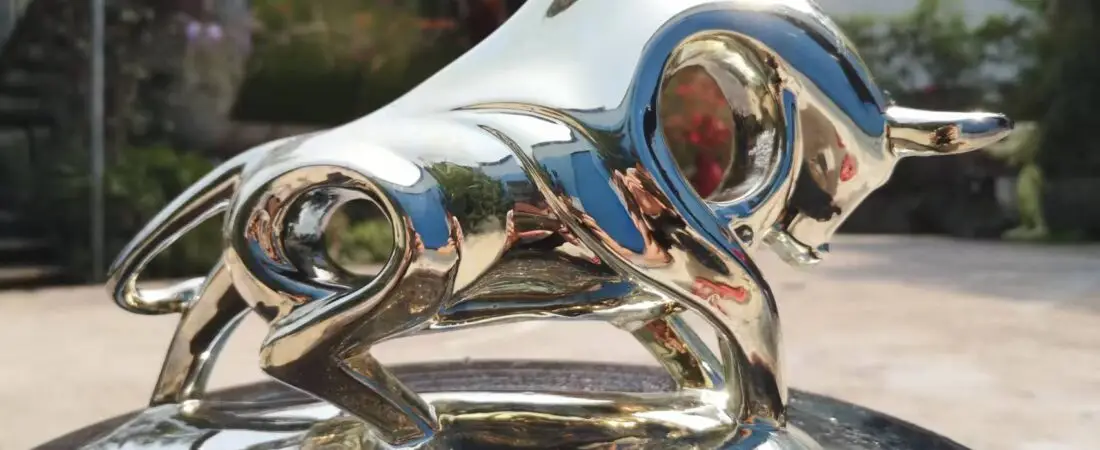
A public sculpture never stands alone. Architecture, landscape, sunlight, weather, and the movement of people all influence how a work is experienced. This relationship is especially important for stainless steel public sculpture. Reflective surfaces change with the seasons and the shifting qualities of natural light, creating an artwork that appears different throughout the day. The surrounding environment is not merely a backdrop. It becomes an active participant in the artistic experience.
Lasting Public Art Requires Long-Term Thinking
A sculpture may remain in place for generations, making durability and maintenance essential parts of good design.
Material selection, structural engineering, surface finishing, and accessibility for future care should all be considered from the earliest stages of a project. Long-term stewardship protects both the artwork and the investment behind it.
Public art should not only make a strong first impression—it should continue to inspire decades after installation.
Collaboration Creates Better Public Art
The most successful public sculptures are rarely the work of a single individual. Clients provide vision and purpose. Artists contribute creativity and imagination. Architects, engineers, fabricators, art consultants, and installation specialists each bring their own expertise to the process. Finally, the public gives the artwork a life beyond its original design through daily interaction and shared experience. When these perspectives work together, public art becomes richer, more resilient, and more meaningful.
Looking Beyond the Sculpture
Great public art is not measured simply by its size or material. Its true value lies in the relationships it creates—between people and places, history and innovation, imagination and everyday life. At Axis Heritage, we believe that the most successful stainless steel public sculptures are those that continue to evolve after they are installed. They gather stories, reflect changing communities, and quietly shape the identity of the places they call home.
The best public art does not simply fill a space. It connects people, place, and purpose, creating experiences that grow more meaningful with time.